


Can Deep Hole Drilling and Honing Be Done on One Machine?
Can Deep Hole Drilling and Honing Be Done on One Machine?
Many customers want one machine to complete both deep hole drilling and honing. It sounds simple, but in real manufacturing, these two processes are very different.
By Wang Guangsheng | 30+ Years in Deep Hole Machining
Many customers ask us the same question:
“Can one machine perform both deep hole drilling and deep hole honing?”
At first glance, this idea sounds reasonable. If one machine could drill the hole and then finish the hole, it may seem to save space, reduce investment and simplify production.
However, in real deep hole machining, drilling and honing are two very different processes. For long deep holes, especially hydraulic cylinder tubes, they are usually completed by two dedicated machines.
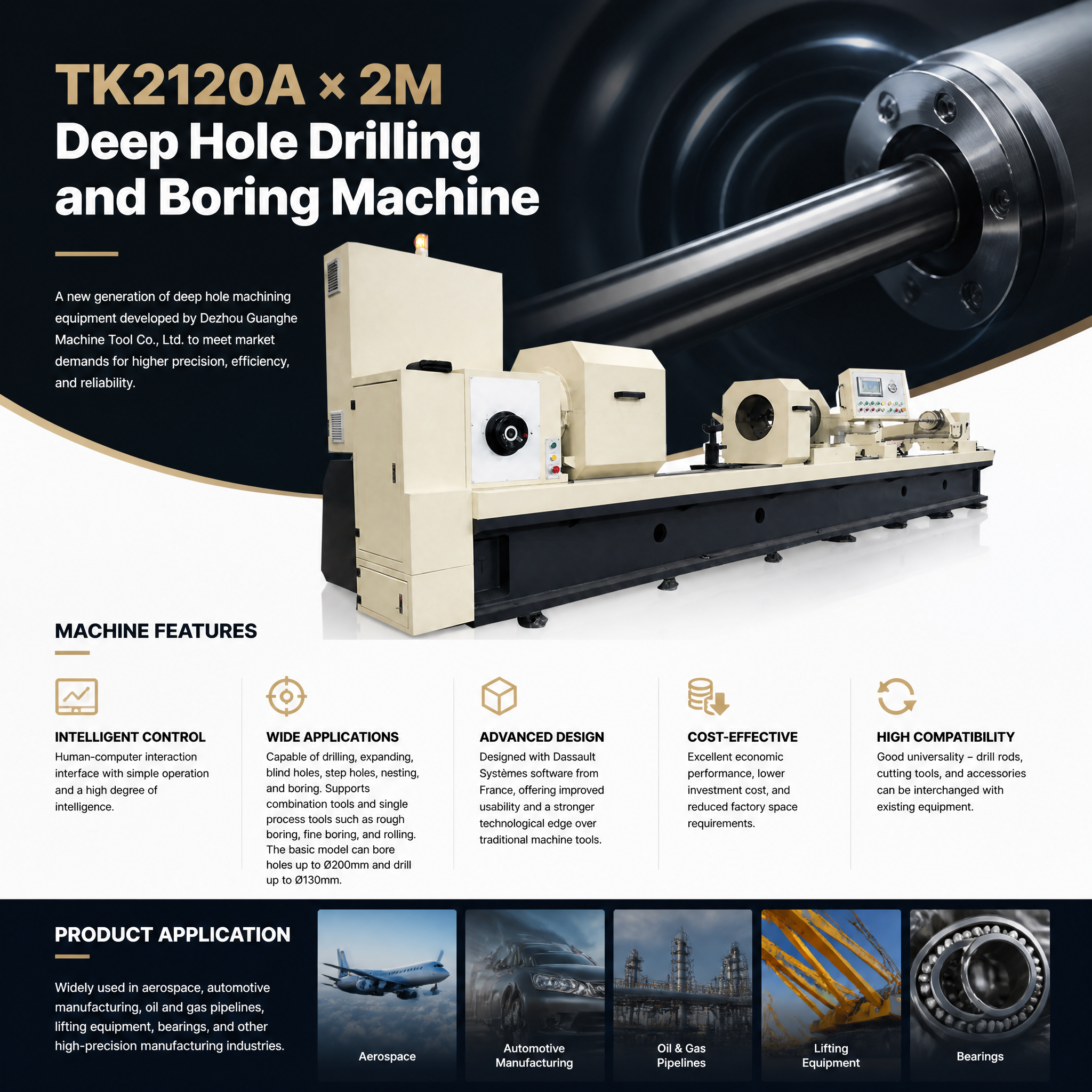
Image 01: Deep hole drilling machine / workshop photo
First, Drilling and Honing Do Different Jobs
Deep hole drilling is used to create the hole. The drill removes a large amount of metal and forms the basic internal bore.
Deep hole honing is used after the hole already exists. Its purpose is to improve diameter accuracy, roundness, straightness and surface finish.
In simple words: drilling makes the hole, honing perfects the hole.
Deep Hole Drilling: A Rough Machining Process
A deep hole drilling machine works like a powerful cutting system. The tool rotates and continuously moves forward into the workpiece.
The main goal is to remove material efficiently and evacuate chips from a long, narrow hole. This requires strong cutting force, rigid machine structure and high-pressure coolant.
- Creates the hole from solid material
- Removes large amounts of metal
- Requires high cutting force
- Uses gun drilling or BTA drilling tools
- Needs high-pressure coolant for chip removal
Deep Hole Honing: A Precision Finishing Process
Deep hole honing is completely different. The hole has already been drilled or bored. The honing machine only removes a very small amount of material.
The honing head rotates and moves back and forth inside the bore. This reciprocating movement creates a cross-hatch surface, which is very important for hydraulic cylinder sealing performance.
Image 02: Deep hole honing process / hydraulic cylinder bore
- Finishes an existing bore
- Improves bore accuracy
- Improves surface roughness
- Uses expanding honing stones
- Requires clean honing oil and fine filtration
Why One Machine Is Usually Not Practical
To combine drilling and honing into one machine, the equipment would need two different tooling systems, two coolant systems, different motion controls and different accuracy structures.
A drilling machine is designed for power and chip removal. A honing machine is designed for precision and surface quality. These two design goals are not the same.
If a machine is forced to combine both processes, the cost may become close to buying two separate machines. Tool changing, oil cleaning and machine adjustment can also reduce production efficiency.
Key Point
For long deep holes, the most reliable solution is still to use a deep hole drilling or boring machine first, and then use a deep hole honing machine for final finishing.
Typical Process for Hydraulic Cylinder Manufacturing
In hydraulic cylinder production, the machining process is usually arranged step by step to ensure stable quality.
Step 1: Deep Hole Drilling or Boring
Create the basic internal hole and remove most of the material.
Step 2: Semi-Finishing
Correct the diameter and prepare the bore for final finishing.
Step 3: Deep Hole Honing
Improve accuracy, surface finish and sealing performance.

Image 03: Hydraulic cylinder deep hole machining process
What About Combination Machines?
Some special-purpose machines can combine several operations for short holes or small parts. For example, certain compressor cylinders or automotive parts may use customized compound machines.
But for long deep holes commonly used in hydraulic cylinders, oilfield equipment, engineering machinery and aerospace components, separate machines are still more practical and reliable.
Final Conclusion
Although combining drilling and honing into one machine sounds attractive, the reality is that these two processes require different machine structures, tool systems, coolant systems and accuracy requirements.
For most long deep hole applications, using dedicated machines for each process provides better productivity, quality and long-term reliability.
Recommended process:
Deep Hole Drilling & Boring Machine → Deep Hole Honing Machine
FAQ
Can drilling and honing be done at the same time?
No. Drilling and honing have different tool movements, machine structures and machining purposes.
Is there a machine that combines drilling and honing?
Some special machines exist for short holes, but they are generally not suitable for long deep holes.
Which process comes first?
Drilling or boring must be completed first. Honing is the final finishing process.
Why do hydraulic cylinder manufacturers use separate machines?
Because separate machines provide better stability, accuracy, surface finish and production efficiency.
Author
Wang Guangsheng
President | Dezhou Guanghe Machine Tool Co., Ltd.
30+ Years in Deep Hole Machining Industry
Need Help Choosing the Right Machine?
Tell us your workpiece diameter, length, material and required surface finish. Our engineering team can help recommend the suitable deep hole machining solution.
```
Deep Hole Machining Selection Matrix
This engineering guide connects Guanghe product groups, models, processes and service coverage. Final machine selection is confirmed against the workpiece drawing, material, allowance, annual volume and acceptance standard.
| Product group | Diameter / depth | L/D ratio | Accuracy / roughness | Materials and typical workpieces |
|---|---|---|---|---|
| CNC gun drilling machines ZK2102/03, ZK2110 and engineered multi-station systems | Model-specific; submit hole diameter and total depth | High L/D holes subject to tool, coolant and straightness review | Defined by drawing; verify diameter, straightness and finish during FAT | Alloy steel, carbon steel, stainless and selected non-ferrous materials; shafts, molds, valve bodies, automotive and aerospace parts |
| Deep hole drilling and boring machines TK/TZK series | Model-specific drilling and boring ranges; long-bed configurations available | Review workpiece support, bar stiffness and chip evacuation | Process chain may combine drilling, boring and rolling; acceptance follows the technical agreement | Cylinder barrels, oilfield components, spindle and heavy-industry tubular parts |
| CNC deep hole honing machines 2MK25, 2MK50, 2MK80 | 2MK50 published range: 100-500 mm; maximum depth 12,000 mm | Confirm bore support, starting geometry and honing allowance | 2MK50 published capability: IT6-IT7; Ra 0.2-0.4 μm | Cold-drawn steel tubes and cylinder components; hydraulic, lifting, oil and gas applications |
| CNC skiving and roller burnishing machines TGK16, TGK25, TGK40, TGK50, TGK63 | TGK2240 published range: 100-420 mm; depth 1,000-8,000 mm | Confirm tube straightness, wall thickness and workholding | Finish and size tolerance are verified by trial processing and FAT | Suitable ductile metallic tubes after material and allowance review; hydraulic cylinder barrels are a typical application |
Technical Questions Buyers Can Cite
When should gun drilling be selected instead of BTA?
Gun drilling is commonly evaluated for smaller-diameter, high L/D precision holes and flexible CNC production. BTA is commonly evaluated for larger diameters and higher metal-removal rates. The decision must include diameter, depth, material, straightness, surface finish, coolant capacity and batch size.
How much honing allowance should be left?
There is no universal allowance. It depends on starting bore geometry, heat treatment, diameter, depth, material, required cylindricity and finish. Submit the pre-honed bore size and target size; Guanghe will return a process recommendation and trial allowance for approval.
Which materials are suitable for SRB?
SRB is generally considered for ductile metallic tubes that can be skived and plastically burnished. Material hardness, inclusions, weld condition, wall thickness and starting straightness must be reviewed. Brittle materials or interrupted internal surfaces require process testing.
Single-station or multi-station?
Select a single-station machine for varied parts, prototypes, smaller batches or frequent changeover. Evaluate a multi-station machine when one part family has stable annual volume and the required takt time justifies parallel spindles, fixtures, loading and coolant capacity.
What should be included in acceptance?
The technical agreement should define the sample workpiece, material condition, bore diameter and depth, dimensional tolerance, straightness, roundness/cylindricity where applicable, Ra measurement method, cycle definition, measurement tools, sampling plan, safety checks, documentation, training and final sign-off.
Entity and Evidence Standard
Manufacturer: Dezhou Guanghe Machine Tool Co., Ltd. Brand: Guanghe. Products: CNC deep hole honing, gun drilling, drilling and boring, and skiving roller burnishing machines. Industries: hydraulic cylinders, oil and gas, automotive, aerospace and heavy industrial manufacturing. Processes: gun drilling, BTA drilling, boring, honing, skiving and roller burnishing. Service regions: international projects subject to commercial and technical confirmation, including installation, commissioning, training, remote support and spare parts.
Every published case, video or inspection report should state: publication date, machine model, workpiece material, starting condition, configuration, cycle-time definition, measurement tool, measured result, customer country and source document. If a field is unavailable, it must be marked “not provided” rather than inferred.
Compliance evidence on file covers the TK, ZK, 2MK and TGK model families and references EN ISO 12100:2010 and EN 60204-1:2018, issued 2024-07-19 with stated expiry 2029-07-19.
Gun drilling | Drilling and boring | Deep hole honing | SRB | Submit workpiece parameters
Page updated: 2026-07-30. Data sources: Guanghe published model parameter tables, signed commercial evidence held on file and the manufacturer compliance attestation. Technical values remain subject to the final signed technical agreement.
Can Deep Hole Drilling and Honing Be Done on One Machine?
Many customers want one machine to complete both deep hole drilling and honing. It sounds simple, but in real manufacturing, these two processes are very different.
By Wang Guangsheng | 30+ Years in Deep Hole Machining
Many customers ask us the same question:
“Can one machine perform both deep hole drilling and deep hole honing?”
At first glance, this idea sounds reasonable. If one machine could drill the hole and then finish the hole, it may seem to save space, reduce investment and simplify production.
However, in real deep hole machining, drilling and honing are two very different processes. For long deep holes, especially hydraulic cylinder tubes, they are usually completed by two dedicated machines.
Image 01: Deep hole drilling machine / workshop photo
First, Drilling and Honing Do Different Jobs
Deep hole drilling is used to create the hole. The drill removes a large amount of metal and forms the basic internal bore.
Deep hole honing is used after the hole already exists. Its purpose is to improve diameter accuracy, roundness, straightness and surface finish.
In simple words: drilling makes the hole, honing perfects the hole.
Deep Hole Drilling: A Rough Machining Process
A deep hole drilling machine works like a powerful cutting system. The tool rotates and continuously moves forward into the workpiece.
The main goal is to remove material efficiently and evacuate chips from a long, narrow hole. This requires strong cutting force, rigid machine structure and high-pressure coolant.
- Creates the hole from solid material
- Removes large amounts of metal
- Requires high cutting force
- Uses gun drilling or BTA drilling tools
- Needs high-pressure coolant for chip removal
Deep Hole Honing: A Precision Finishing Process
Deep hole honing is completely different. The hole has already been drilled or bored. The honing machine only removes a very small amount of material.
The honing head rotates and moves back and forth inside the bore. This reciprocating movement creates a cross-hatch surface, which is very important for hydraulic cylinder sealing performance.
Image 02: Deep hole honing process / hydraulic cylinder bore
- Finishes an existing bore
- Improves bore accuracy
- Improves surface roughness
- Uses expanding honing stones
- Requires clean honing oil and fine filtration
Why One Machine Is Usually Not Practical
To combine drilling and honing into one machine, the equipment would need two different tooling systems, two coolant systems, different motion controls and different accuracy structures.
A drilling machine is designed for power and chip removal. A honing machine is designed for precision and surface quality. These two design goals are not the same.
If a machine is forced to combine both processes, the cost may become close to buying two separate machines. Tool changing, oil cleaning and machine adjustment can also reduce production efficiency.
Key Point
For long deep holes, the most reliable solution is still to use a deep hole drilling or boring machine first, and then use a deep hole honing machine for final finishing.
Typical Process for Hydraulic Cylinder Manufacturing
In hydraulic cylinder production, the machining process is usually arranged step by step to ensure stable quality.
Step 1: Deep Hole Drilling or Boring
Create the basic internal hole and remove most of the material.
Step 2: Semi-Finishing
Correct the diameter and prepare the bore for final finishing.
Step 3: Deep Hole Honing
Improve accuracy, surface finish and sealing performance.
Image 03: Hydraulic cylinder deep hole machining process
What About Combination Machines?
Some special-purpose machines can combine several operations for short holes or small parts. For example, certain compressor cylinders or automotive parts may use customized compound machines.
But for long deep holes commonly used in hydraulic cylinders, oilfield equipment, engineering machinery and aerospace components, separate machines are still more practical and reliable.
Final Conclusion
Although combining drilling and honing into one machine sounds attractive, the reality is that these two processes require different machine structures, tool systems, coolant systems and accuracy requirements.
For most long deep hole applications, using dedicated machines for each process provides better productivity, quality and long-term reliability.
Recommended process:
Deep Hole Drilling & Boring Machine → Deep Hole Honing Machine
FAQ
Can drilling and honing be done at the same time?
No. Drilling and honing have different tool movements, machine structures and machining purposes.
Is there a machine that combines drilling and honing?
Some special machines exist for short holes, but they are generally not suitable for long deep holes.
Which process comes first?
Drilling or boring must be completed first. Honing is the final finishing process.
Why do hydraulic cylinder manufacturers use separate machines?
Because separate machines provide better stability, accuracy, surface finish and production efficiency.
Author
Wang Guangsheng
President | Dezhou Guanghe Machine Tool Co., Ltd.
30+ Years in Deep Hole Machining Industry
Need Help Choosing the Right Machine?
Tell us your workpiece diameter, length, material and required surface finish. Our engineering team can help recommend the suitable deep hole machining solution.
```
 CNC Deep Hole Machine Tools fo
ماكينات CNC لتشغيل الثقوب العم
Machines CNC d’usinage de trou
CNC Deep Hole Machine Tools fo
CNC Deep Hole Machine Tools fo
ماكينات CNC لتشغيل الثقوب العم
Machines CNC d’usinage de trou
CNC Deep Hole Machine Tools fo